
Every crystal — natural or grown in a lab — is built from atoms stacked in an orderly, repeating pattern. The shape of that pattern, and the way its symmetry repeats, sorts all crystals into seven crystal systems and, more finely, into 32 crystal classes. This page is the map: what each system means, the symmetry behind every class, and a mineral that wears it.
Crystal systems are the seven broad families, set by the lengths of a crystal's three (or four) reference axes and the angles between them. They answer the big question: is the box square, stretched, or skewed?
Crystal classes — also called point groups — go one level deeper. Within each system, they describe exactly how the symmetry elements (rotation axes, mirror planes and centres of inversion) combine. There are 32 of them, and they are written in Hermann–Mauguin notation (the symbols like 4/mmm or m3m in the table below). Knowing a mineral's class predicts real behaviour — whether it can be piezoelectric, pyroelectric, or twist polarised light.
Every class is built from just four kinds of symmetry. Spot these in a Hermann–Mauguin symbol and the whole table opens up.
A line you can spin the crystal around and have it look the same. A 2-fold axis repeats every 180°, a 4-fold every 90°, a 6-fold every 60°. Crystals allow only 1-, 2-, 3-, 4- and 6-fold axes — never 5-fold.
A plane that reflects one half of the crystal onto the other. In the symbols, 4/m means a mirror across the 4-fold axis, while 4mm means mirrors containing it.
A central point through which every feature has an identical, opposite partner. Classes that have one are centrosymmetric — and can never be piezoelectric.
A combined move: rotate by the angle, then invert through the centre. The bar over a number (as in 4 or 3) marks it. Note that 6 is identical to a 3-fold axis with a perpendicular mirror (3/m).
| Crystal System | Crystal Class | Point Group | Symmetry |
|---|---|---|---|
| Triclinic | Pedial | 1 | No symmetry — identity only. |
| Pinacoidal | 1 | A centre of inversion only. | |
| Monoclinic | Sphenoidal | 2 | One 2-fold rotation axis. |
| Domatic | m | One mirror plane. | |
| Prismatic | 2/m | One 2-fold axis, one perpendicular mirror, a centre. | |
| Orthorhombic | Rhombic-disphenoidal | 222 | Three mutually perpendicular 2-fold axes (chiral). |
| Rhombic-pyramidal | mm2 | Two mirror planes meeting on a 2-fold axis (polar). | |
| Rhombic-dipyramidal | mmm | Three perpendicular mirrors, three 2-fold axes, a centre. | |
| Tetragonal | Tetragonal-pyramidal | 4 | One 4-fold rotation axis (polar). |
| Tetragonal-disphenoidal | 4 | One 4-fold inversion axis. | |
| Tetragonal-dipyramidal | 4/m | One 4-fold axis, a perpendicular mirror, a centre. | |
| Tetragonal-trapezohedral | 422 | One 4-fold axis and four 2-fold axes (chiral). | |
| Ditetragonal-pyramidal | 4mm | One 4-fold axis and four mirror planes (polar). | |
| Tetragonal-scalenohedral | 42m | One 4-fold inversion axis, two 2-fold axes, two mirrors. | |
| Ditetragonal-dipyramidal | 4/mmm | One 4-fold axis, four 2-fold axes, five mirrors, a centre. | |
| Trigonal | Trigonal-pyramidal | 3 | One 3-fold rotation axis (polar, chiral). |
| Rhombohedral | 3 | One 3-fold inversion axis (gives a centre). | |
| Trigonal-trapezohedral | 32 | One 3-fold axis and three 2-fold axes (chiral). | |
| Ditrigonal-pyramidal | 3m | One 3-fold axis and three mirror planes (polar). | |
| Ditrigonal-scalenohedral | 3m | One 3-fold inversion axis, three 2-fold axes, three mirrors, a centre. | |
| Hexagonal | Hexagonal-pyramidal | 6 | One 6-fold rotation axis (polar). |
| Trigonal-dipyramidal | 6 | One 6-fold inversion axis (≡ 3/m). | |
| Hexagonal-dipyramidal | 6/m | One 6-fold axis, a perpendicular mirror, a centre. | |
| Hexagonal-trapezohedral | 622 | One 6-fold axis and six 2-fold axes (chiral). | |
| Dihexagonal-pyramidal | 6mm | One 6-fold axis and six mirror planes (polar). | |
| Ditrigonal-dipyramidal | 6m2 | One 6-fold inversion axis, three 2-fold axes, four mirrors. | |
| Dihexagonal-dipyramidal | 6/mmm | One 6-fold axis, six 2-fold axes, seven mirrors, a centre. | |
| Cubic (Isometric) | Tetartoidal | 23 | Four 3-fold axes and three 2-fold axes (chiral). |
| Diploidal | m3 | Four 3-fold axes, three 2-fold axes, three mirrors, a centre. | |
| Gyroidal | 432 | Three 4-fold, four 3-fold and six 2-fold axes (chiral). | |
| Hextetrahedral | 43m | Four 3-fold axes, three 4 axes and six mirror planes. | |
| Hexoctahedral | m3m | Three 4-fold, four 3-fold, six 2-fold axes; nine mirrors; a centre. | |
| Icosahedral (quasicrystal) | Icosahedral | 532 | Six 5-fold, ten 3-fold and fifteen 2-fold axes — forbidden in periodic crystals. |
The 11 centrosymmetric classes (those with a centre) can never be piezoelectric; the 10 polar classes can be pyroelectric; the 11 chiral (enantiomorphic) classes can rotate polarised light. The final row, icosahedral, is shown for contrast — its 5-fold symmetry is impossible in a repeating lattice, so it is not one of the 32 crystallographic classes.
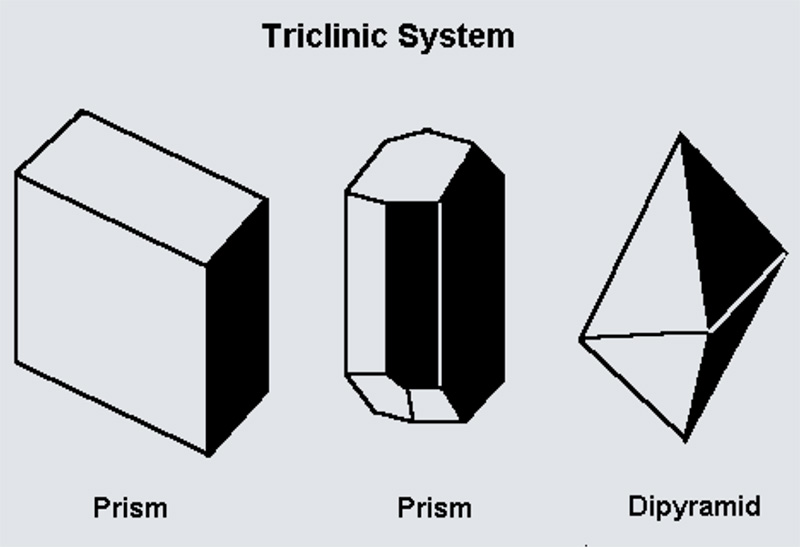

The pedial class has no symmetry at all — no mirror planes, no rotation axes, no centre of inversion. Only the identity maps the crystal onto itself, making it the most asymmetric of all 32 classes.

Adds a single element: a centre of inversion. Every face is matched by a parallel, opposite face through the crystal's centre. It is still triclinic, but with this one extra symmetry — and it is the most common triclinic class.
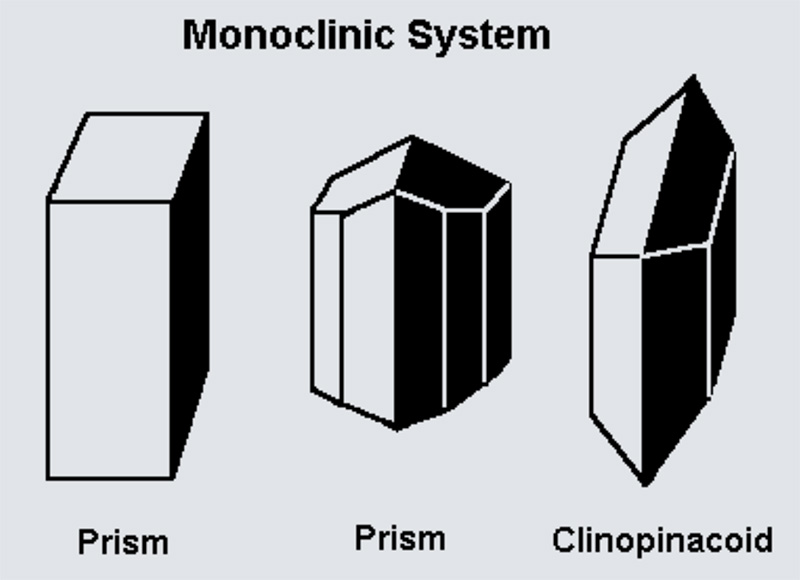

A single 2-fold rotation axis: turn the crystal 180° about it and it looks the same. There are no mirror planes — one of the simpler monoclinic classes, and chiral.
Defined by a single mirror plane: one half of the crystal is the mirror image of the other. That gives partial symmetry while keeping the monoclinic framework.

Combines a 2-fold axis with a mirror plane perpendicular to it, and the centre of inversion they generate. This is the single most populated crystal class among all minerals.
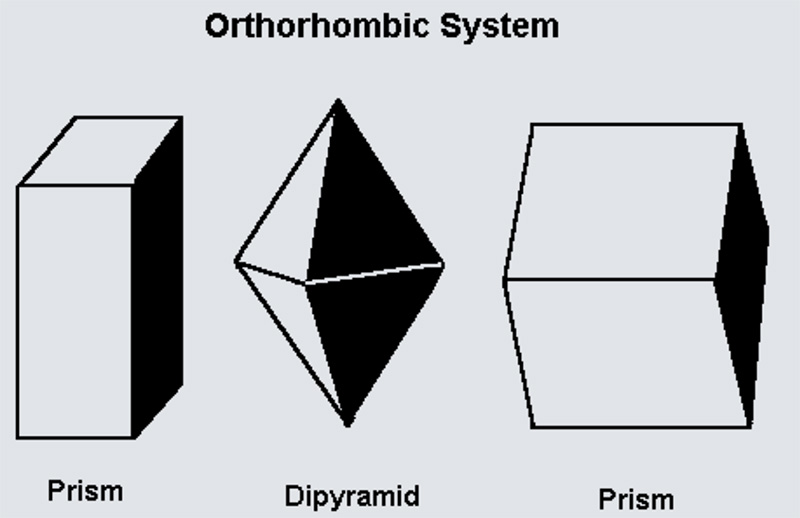
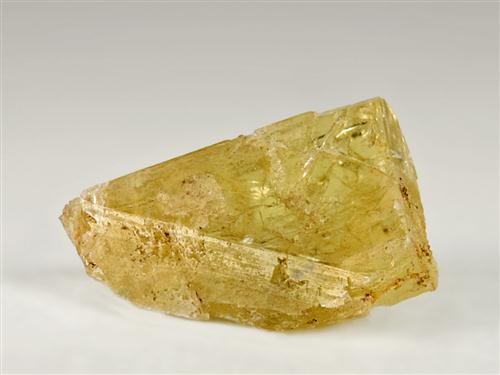
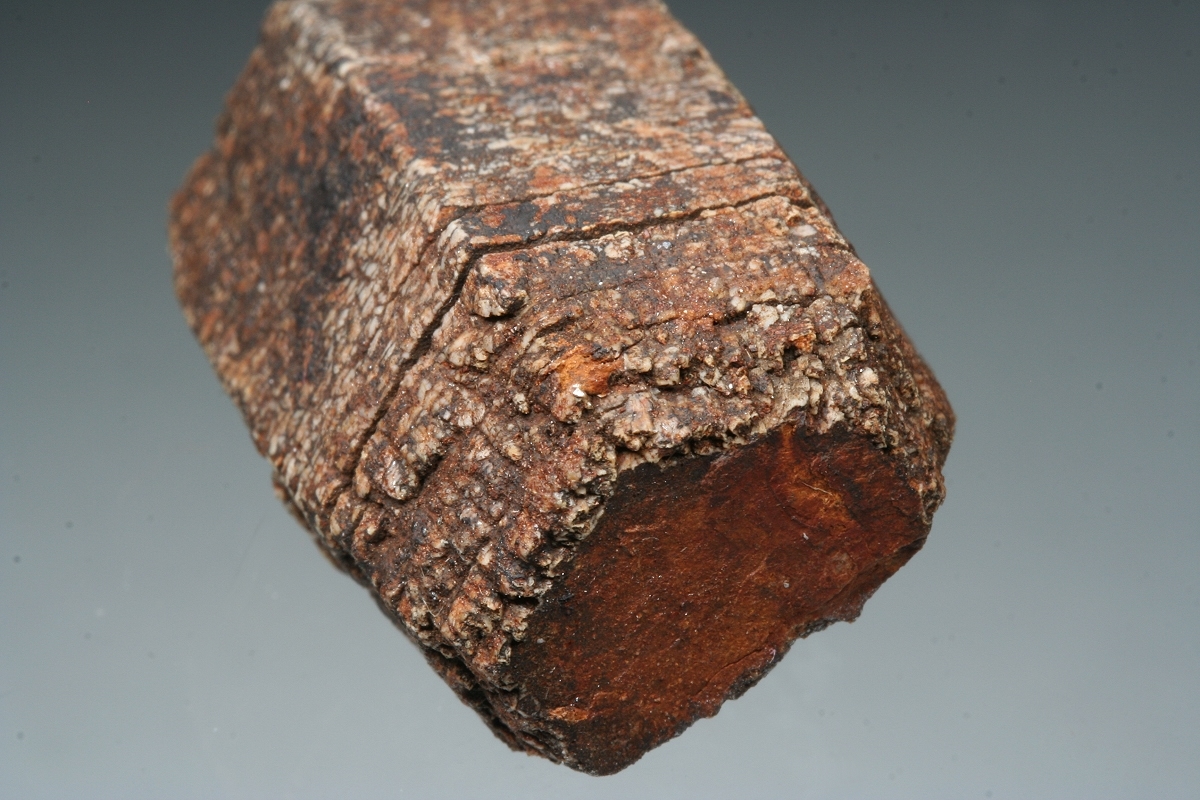
Three mutually perpendicular 2-fold rotation axes and nothing else — no mirror planes, no centre of inversion. The absence of mirrors makes the class chiral.

Two perpendicular mirror planes intersecting along a single 2-fold axis. Because the two ends of that axis differ, crystals are polar — often pyroelectric.
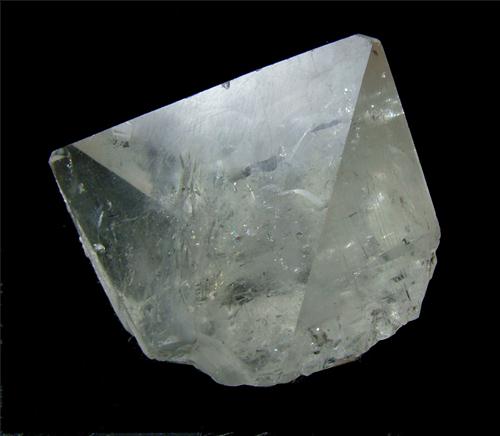
The highest symmetry of the orthorhombic system: three mutually perpendicular mirror planes, three 2-fold axes and a centre of inversion — balanced in all three directions.
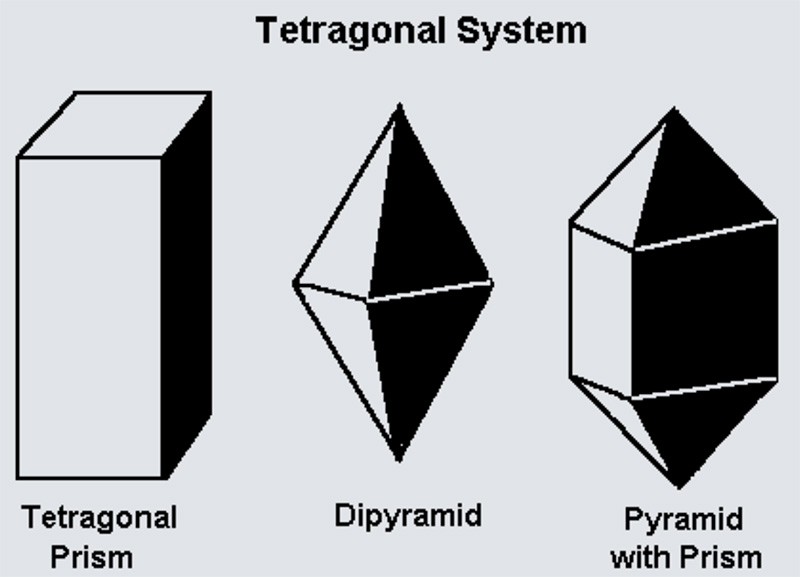
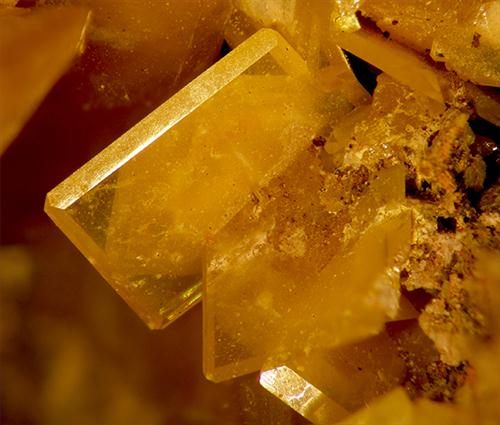
A single 4-fold rotation axis — rotate 90° and it repeats — with no mirror planes or inversion. The two ends of the axis differ, so the class is polar.

Defined by one 4-fold rotoinversion axis: a 90° turn followed by inversion. The crystal looks the same only after that combined operation.

A 4-fold axis with a mirror plane perpendicular to it, generating a centre of inversion — twin pyramids mirrored across the equator.

A 4-fold axis with four 2-fold axes perpendicular to it and no mirror planes — an enantiomorphic (chiral) class that can be optically active.
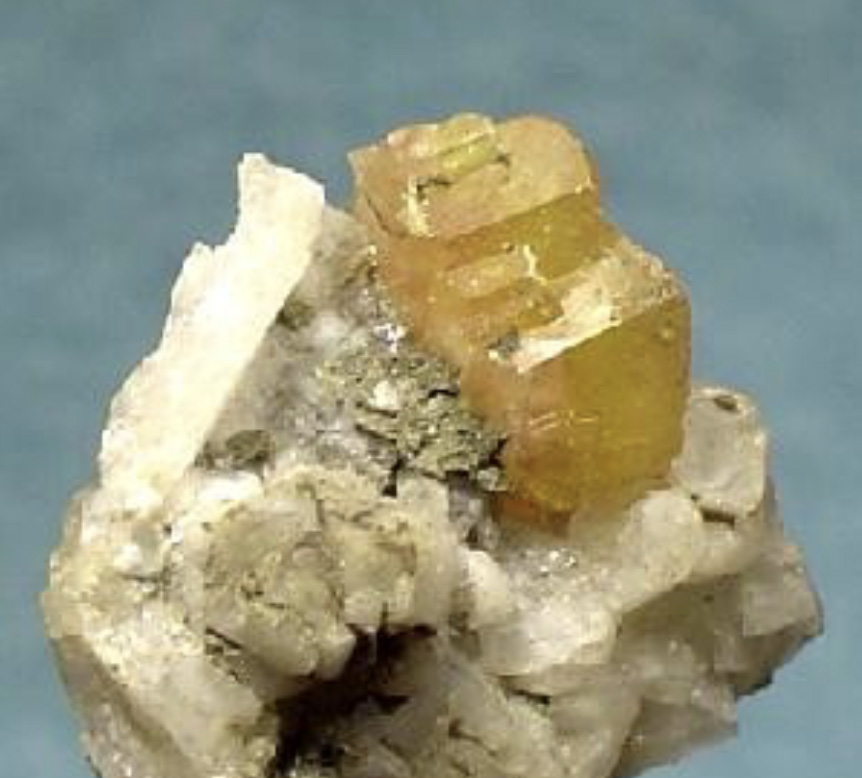
A 4-fold axis ringed by four mirror planes. With no horizontal mirror the class is polar, giving rise to strong piezo- and pyroelectric behaviour.
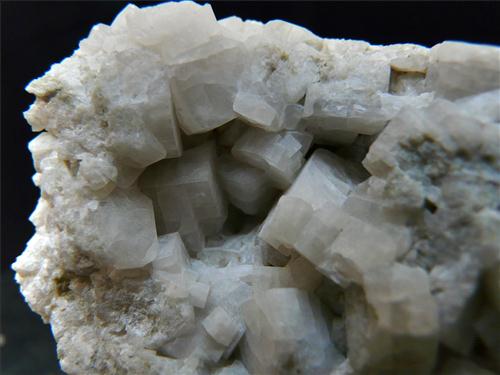
A 4-fold rotoinversion axis combined with two 2-fold axes and two mirror planes — intermediate symmetry within the tetragonal system.
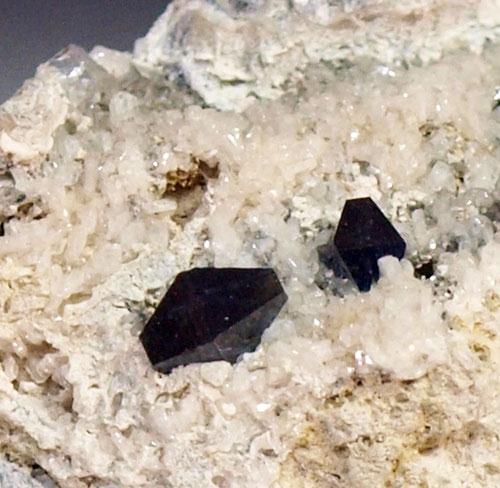
The highest tetragonal symmetry: a 4-fold axis, four 2-fold axes, five mirror planes and a centre of inversion.
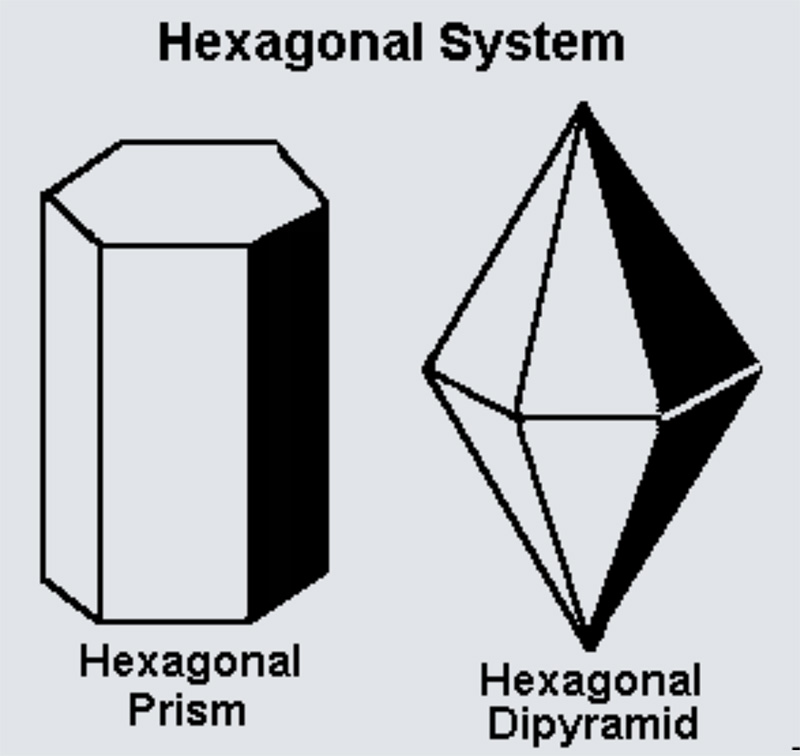
These two systems share the same hexagonal crystal family and are easily confused. Both are described on axes set 120° apart, but the trigonal system is built around a single 3-fold axis (and may also be drawn on a rhombohedral cell), while the hexagonal system is built around a 6-fold axis. Quartz, calcite and tourmaline are trigonal; beryl, apatite and the apatite group are hexagonal.
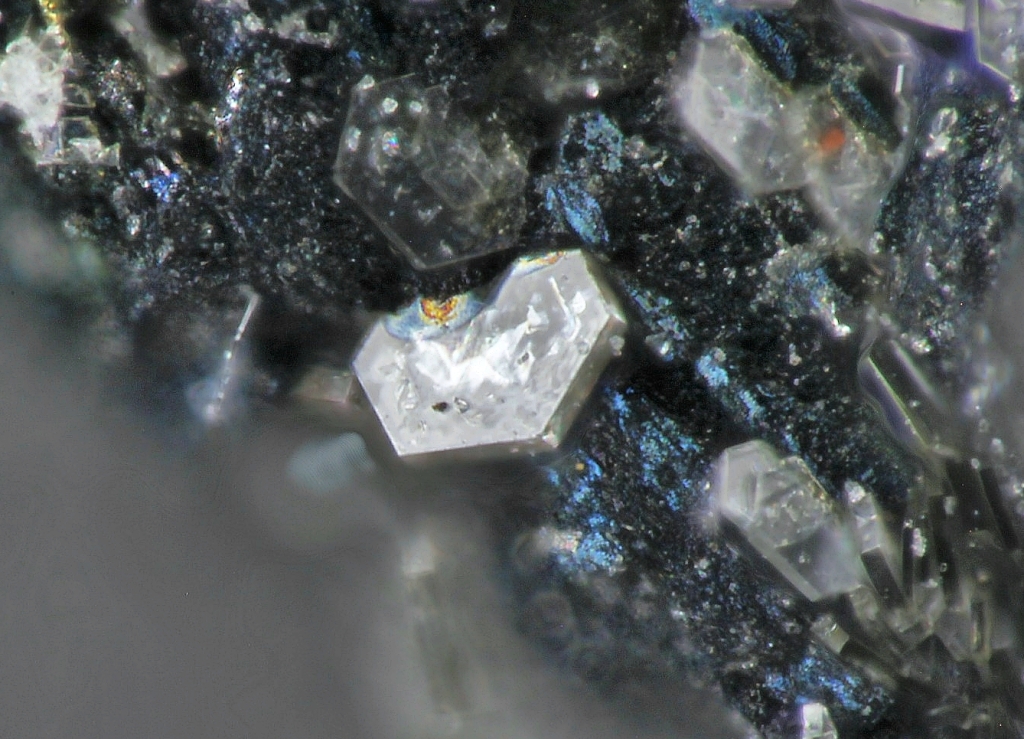
A single 3-fold rotation axis and no other symmetry — no mirror planes, no centre. Being both polar and chiral, it is the lowest-symmetry trigonal class and one of the rarest among minerals.
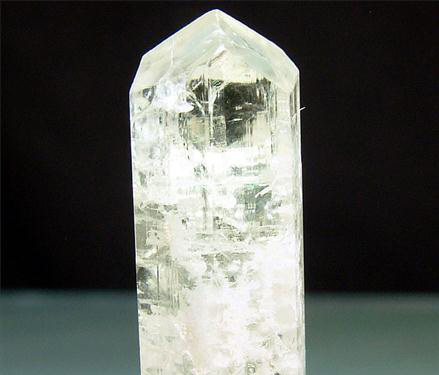
Built on a single 3-fold rotoinversion axis — a 120° turn followed by inversion — which also creates a centre of symmetry. Its cell can be drawn as a rhombohedron with three equal axes meeting at equal, non-right angles. Dolomite shares this class.

A 3-fold axis with three perpendicular 2-fold axes and no mirrors. That chirality is why α-quartz comes in left- and right-handed forms and rotates polarised light. Cinnabar shares the class.
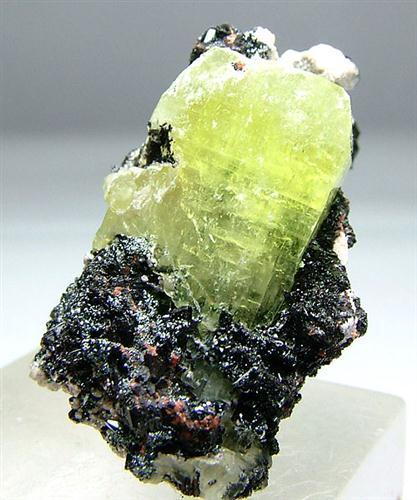
A 3-fold axis with three mirror planes meeting along it. With no horizontal mirror the class is polar — the symmetry of tourmaline and alunite, both noted for pyroelectricity.

A 3-fold rotoinversion axis, three 2-fold axes, three mirror planes and a centre. This is the high-symmetry trigonal class of calcite and corundum, named for its twelve-faced scalenohedron.

A single 6-fold rotation axis with no other symmetry. The two ends of the axis differ, so the class is polar. Nepheline and cancrinite crystallise here.
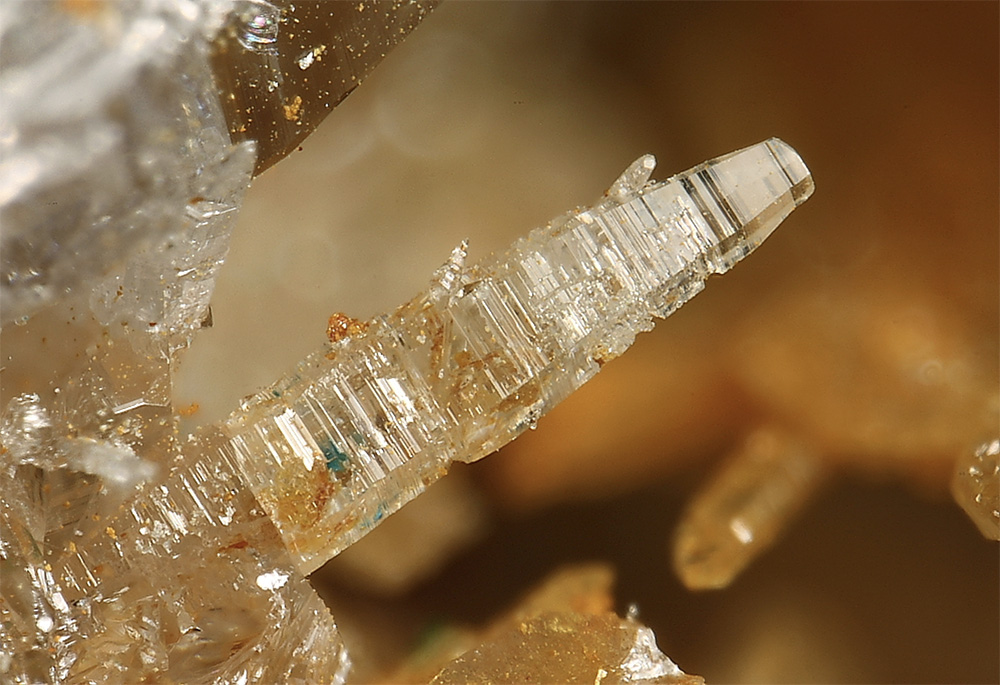
Built on a 6-fold rotoinversion axis, equivalent to a 3-fold axis with a perpendicular mirror plane (3/m). A rare class — cesanite and laurelite are examples.
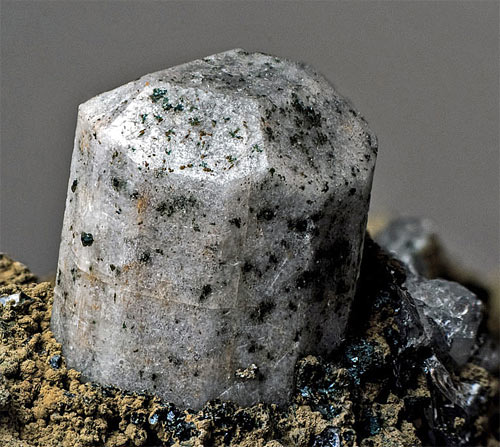
A 6-fold axis with a perpendicular mirror plane and a centre of inversion — two hexagonal pyramids mirrored across the equator. The symmetry of the apatite group and vanadinite.

A 6-fold axis with six perpendicular 2-fold axes and no mirror planes — a chiral class. High-temperature β-quartz and kalsilite belong here.

A 6-fold axis ringed by six mirror planes, with no horizontal mirror — a polar class. Wurtzite and greenockite share this strongly piezoelectric symmetry.

Here the principal axis is a 6-fold rotoinversion axis (≡ 3/m), joined by three 2-fold axes and four mirror planes. It is easily confused with a 3-fold axis below a mirror, yet listed separately. Benitoite is the textbook example.
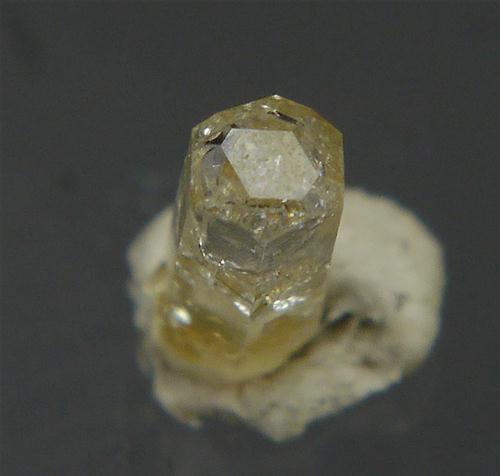
The highest symmetry of the hexagonal system: a 6-fold axis, six 2-fold axes, seven mirror planes and a centre of inversion. Beryl, molybdenite and graphite belong here.

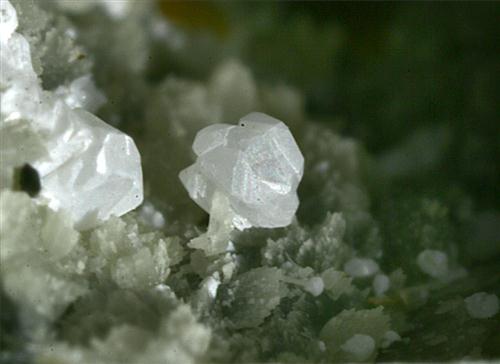
The lowest cubic symmetry: four 3-fold axes through the cube corners and three 2-fold axes, with no mirror planes — a chiral class. Gersdorffite crystallises here.

Three 2-fold axes, four 3-fold axes, three mirror planes and a centre of inversion. Famous for pyrite, whose striated "pyritohedron" reveals this lower-than-full cubic symmetry.

Three 4-fold axes, four 3-fold axes and six 2-fold axes — all proper rotations. With no mirror planes or centre, it is enantiomorphic (chiral). Petzite is an example.

Four 3-fold axes, three 4-fold rotoinversion axes (appearing as 2-fold) and six mirror planes, giving forms such as the tetrahedron. The non-centrosymmetric symmetry of sphalerite, sodalite and tetrahedrite.

The highest symmetry of all 32 classes: three 4-fold axes, four 3-fold axes, six 2-fold axes, nine mirror planes and a centre of inversion. Garnet, fluorite, galena and cuprite belong here.
The seven systems and 32 classes describe everything that can repeat periodically in space. Icosahedral symmetry — with its six 5-fold axes — is deliberately left out, because a 5-fold axis can never tile space without gaps. For most of the 20th century that made it "forbidden." Then came quasicrystals: solids whose atoms are perfectly ordered yet never repeat, earning Dan Shechtman the 2011 Nobel Prize in Chemistry.
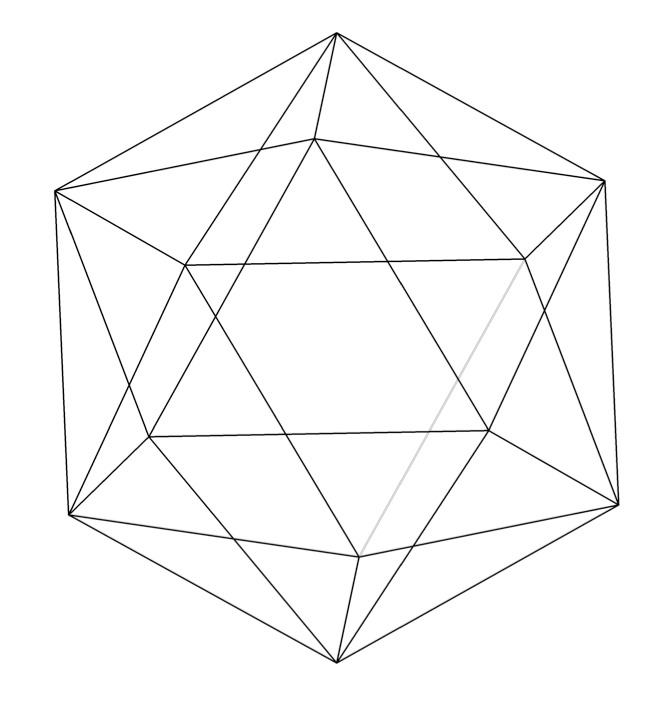
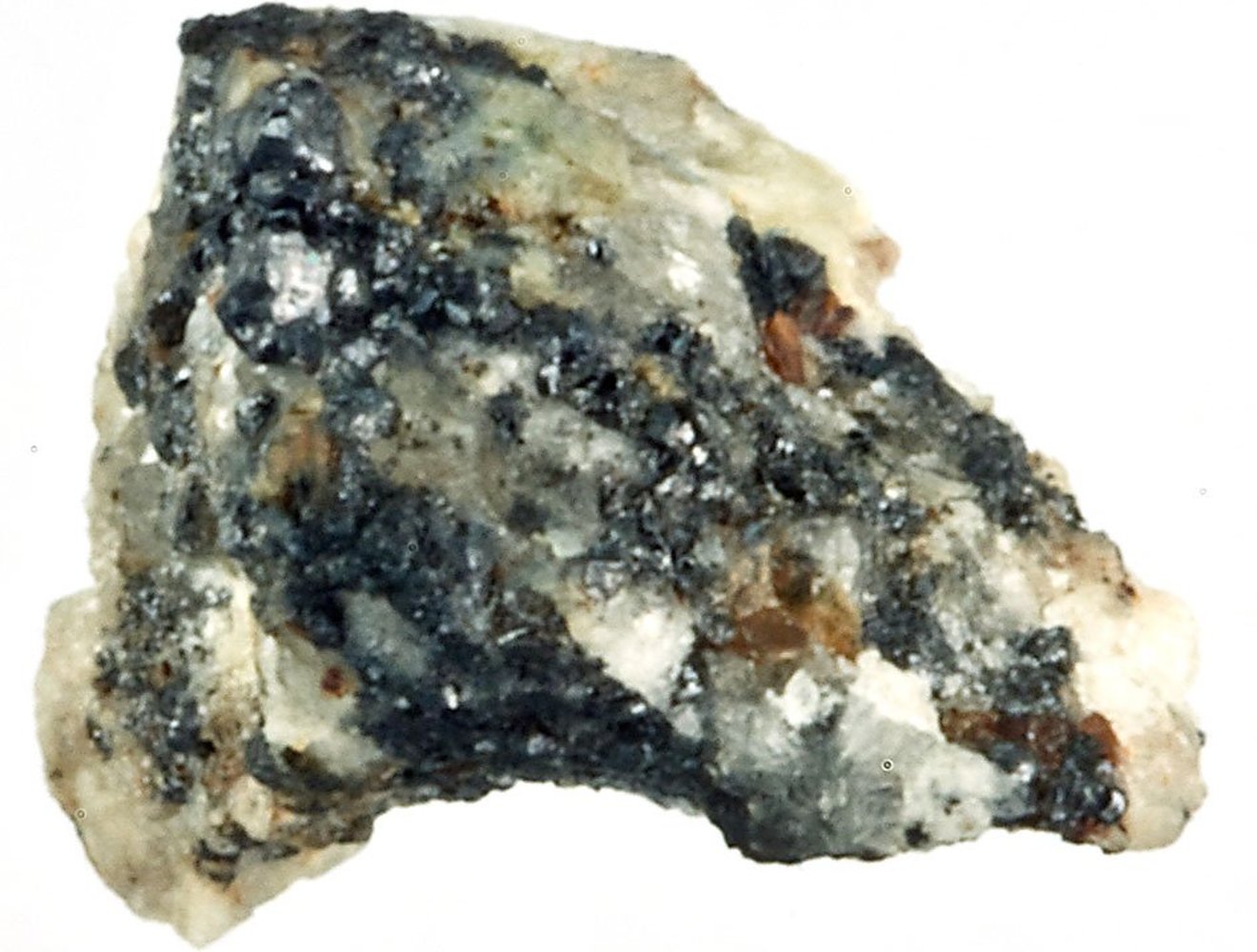
The first known natural quasicrystal (Al₆₃Cu₂₄Fe₁₃). Found in the Khatyrka meteorite from Russia's Koryak Mountains and described in 2009, it shows true icosahedral order with no periodic repetition — proof that nature, not only the laboratory, can build these "forbidden" structures.