
KAlSi3O8
New roads open when the old ones close
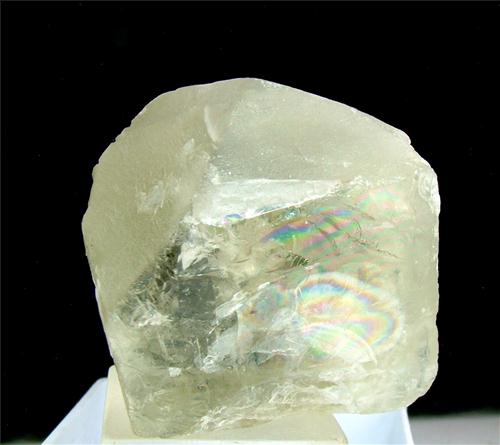
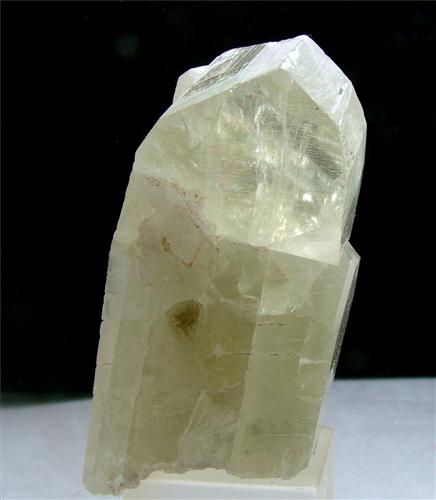
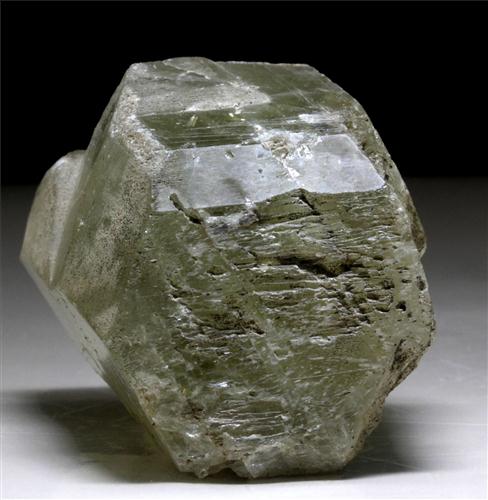
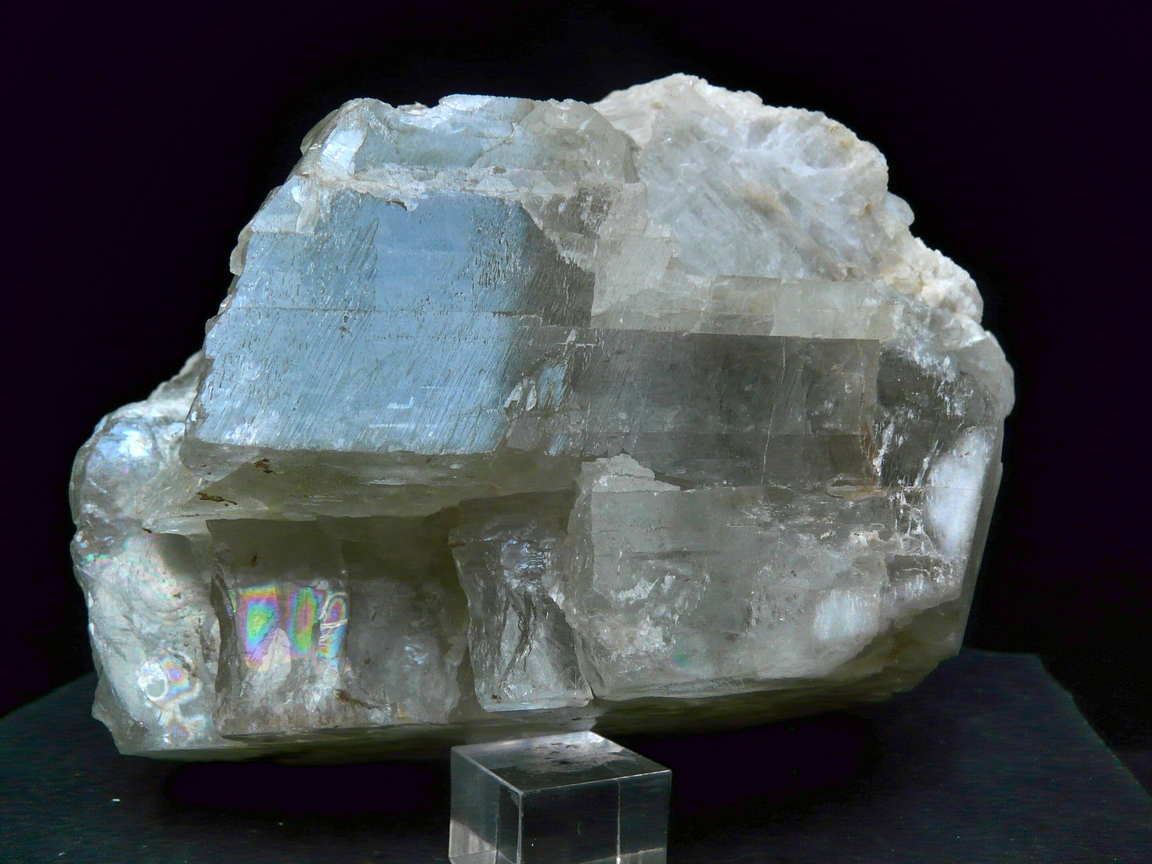
Orthoclase takes its name from the Greek orthos (“straight”) and klasis (“fracture”), after its two cleavage planes that meet at almost exactly a right angle. It was established as a recognised species around 1801.
Orthoclase is potassium feldspar, KAlSi3O8 — a monoclinic tectosilicate in which silicon and aluminium tetrahedra form a continuous three-dimensional framework with potassium filling the spaces. It is one of the most abundant rock-forming minerals on Earth, the pink-to-salmon constituent of countless granites.
It is moderately hard and serves as the standard for hardness 6 on the Mohs scale. Colourless, white, grey, pale yellow or salmon, it carries a vitreous lustre with a pearly sheen on its cleavage faces; its low-temperature gem variety is the source of much moonstone.
As one of the great rock-forming minerals, orthoclase has been known since the earliest days of mineralogy and has no single discoverer or type locality. It crystallises in granites, syenites and pegmatites, and in metamorphic rocks, all over the world.
Fine, well-formed crystals come from many classic localities, and its abundance in continental crust makes it one of the most familiar of all minerals — even detected by rovers in the sandstones of Mars.
One of Earth's most abundant rock-forming minerals, the salmon-pink framework silicate that colours granite the world over.
It defines hardness 6 on the Mohs scale — a fixed reference point against which other minerals are measured.
Its low-temperature gem form yields moonstone, whose soft blue adularescence floats across the surface like light on water.
"As the consciousness within a man grows, he must be aware of the life and death cycle that accompanies moving from level to level."— Swami Rudrananda
Orthoclase works at the heart — the centre of the whole chakra system, where the upper and lower halves meet and where a person connects to others, to nature and to their work in a direct, unfiltered way. Its frequency sits in the middle range and works the nearer layers; its transmission is firm and it stays a moderate while. This is the ground of its old reputation as a stone for finding new ways to reach your goals and for keeping hope alive through misfortune.
As a stone of Life it feeds the heart with vitality, lifting the drained, foggy heaviness that settles in after a setback. Because it also carries Love, the frequency centres fully into the heart and radiates from there, softening that fresh energy with kindness and gratitude rather than mere ambition — so the “new way” it helps you find is one travelled with an open heart, not a clenched will.
"Faith is the lens that focuses the scattered rays of the mind. Without concentration, even the most powerful science remains hidden from the seeker."— Vishuddhananda Paramahansa
It is also Expanding: the renewed energy does not knot in the chest but radiates outward from the centre, so a person feels larger and more at one with their surroundings — and from that wider vantage, fresh roads become visible where before there seemed to be only the closed one. And beneath it waits Joy, the thoughtless gladness that returns of itself once hope is restored and the heart is fed.