
Mn2+5(PO3OH)2(PO4)2·4H2O
Warm rose light loosening the throat
Hureaulite takes its name from its type locality, Les Hureaux, in the Haute-Vienne département of France, where it was first described in the early nineteenth century. Like many phosphate minerals of granite pegmatites, it carries the name of the place that first gave it to science.
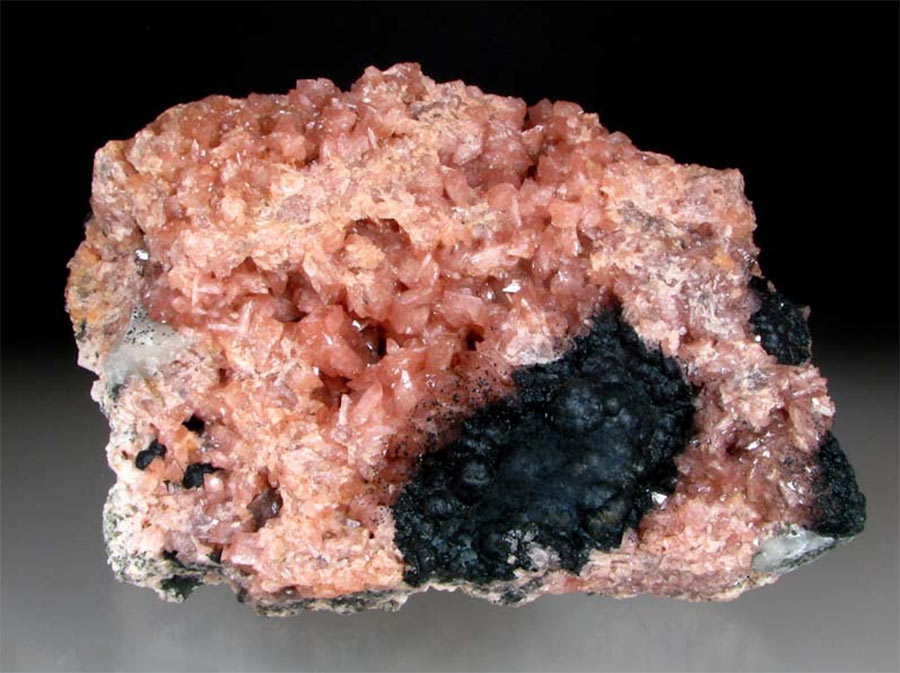
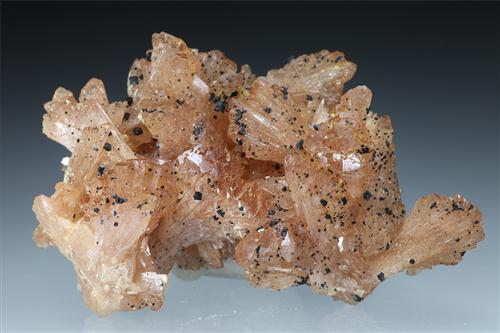
Hureaulite is a hydrated manganese phosphate, monoclinic in symmetry, forming short prismatic to tabular crystals as well as crusts and rounded aggregates. Its colour ranges through pale rose-pink, orange, red, yellow and brown, often warm and translucent, with a vitreous lustre and a moderate hardness of about 3.5.
It is a secondary mineral — it does not crystallise first from the melt but forms later, as primary phosphates such as triphylite alter in granite pegmatites. In this way it is born of change, gathering manganese and water into a new and gentler form.
First described in the 1820s from Les Hureaux in France, hureaulite is now known from phosphate-bearing granite pegmatites around the world, with celebrated specimens from Brazil and the United States.
It is valued by collectors for its warm rose and orange crystals, which form in the altered pockets of pegmatites alongside other manganese and iron phosphates.
Warm manganese colours — pink, orange, red, honey — in translucent prismatic crystals.
A secondary mineral, formed as older phosphates weather and reorganise — renewal made visible.
A characteristic species of phosphate-rich granite pegmatites, gathered with iron and manganese minerals.


"God alone is real, and all else is illusory."— Ramakrishna
Hureaulite works at the throat — the centre of voice, truth and honest expression, the bridge between what the heart feels and what the world is allowed to hear. Its warm rose-orange light brings a softness here, easing the tightness that locks words away and helping the true word rise gently to the surface.
As a stone of Healing it tends to that throat-centre directly, soothing the place where grief, fear or held-back speech have gathered and gone hard — like the mineral itself, which is born from the patient alteration of an older, rougher stone into a gentler, warmer form. Its frequency and power are balanced and steady, neither forceful nor faint, so the easing comes at a kind and bearable pace.
"Why do you seek God in stones and temples? He is the one who sees through your eyes and hears through your ears."— Trailanga Swami
And it carries Love: the healing it offers is warm rather than clinical, so the voice that returns is not merely freed but kind — able to speak truth tenderly. This is a soft, restorative medicine for the throat, for anyone who has had to swallow their words and longs to speak again from an open and loving heart.