

CaBe(PO4)(F,OH)
Will and joy radiating outward from the centre
Named in honour of Siegmund August Wolfgang von Herder (1776–1838), a mining official and geologist based in Freiberg, Saxony, Germany. Von Herder served as director of the famous Freiberg Mining Academy district and made significant contributions to the study of Saxon ore deposits. The mineral was formally described in 1828 by Wilhelm Karl von Ammon from specimens found in the Erzgebirge region of Saxony.
The prefix hydroxyl- was later added to distinguish specimens where the hydroxyl group (OH⁻) dominates over fluorine (F⁻) at the same structural site, creating the two formally recognised end-members of the herderite series.
Herderite and hydroxylherderite form a continuous substitution series: a single anion site in the crystal lattice can be occupied by either fluorine (F⁻) or a hydroxyl group (OH⁻). When fluorine dominates the mineral is formally herderite; when hydroxyl dominates it is hydroxylherderite. Most specimens in collections and on the market are hydroxylherderite or intermediate in composition, as the fully F-dominant end-member is comparatively rare. The beryllium is coordinated tetrahedrally by oxygen and sits adjacent to phosphate tetrahedra, creating a compact, interlocked framework responsible for the mineral's moderate hardness.
First described in 1828 from Ehrenfriedersdorf in the Erzgebirge (Ore Mountains) of Saxony, Germany — a region long renowned for its tin and tungsten mineralisation. The type locality yielded only modest specimens, and the mineral remained little-known for over a century.
The picture changed dramatically when large, gem-quality crystals began arriving from pegmatites in Minas Gerais, Brazil, and later from the Baltistan region of northern Pakistan. The Pakistani material — often a vivid green caused by trace chromium — is now considered among the finest in the world. Additional green crystals have been recovered from the Konar Province of Afghanistan and from pegmatites in Maine, USA. Hydroxylherderite on white albite matrix from Pakistan has become particularly sought after, with the feldspar host visibly amplifying the crystal's energy profile.
Herderite and hydroxylherderite contain beryllium, a confirmed human carcinogen. Inhalation of beryllium dust or fine particles can cause berylliosis — a serious, potentially fatal chronic lung disease. Even small exposures over time carry risk.
Handle intact specimens normally with clean hands, but never grind, saw, or polish these minerals without full respiratory protection. Do not make crystal water or elixirs from this mineral. Wash hands after handling and keep away from children and pets.

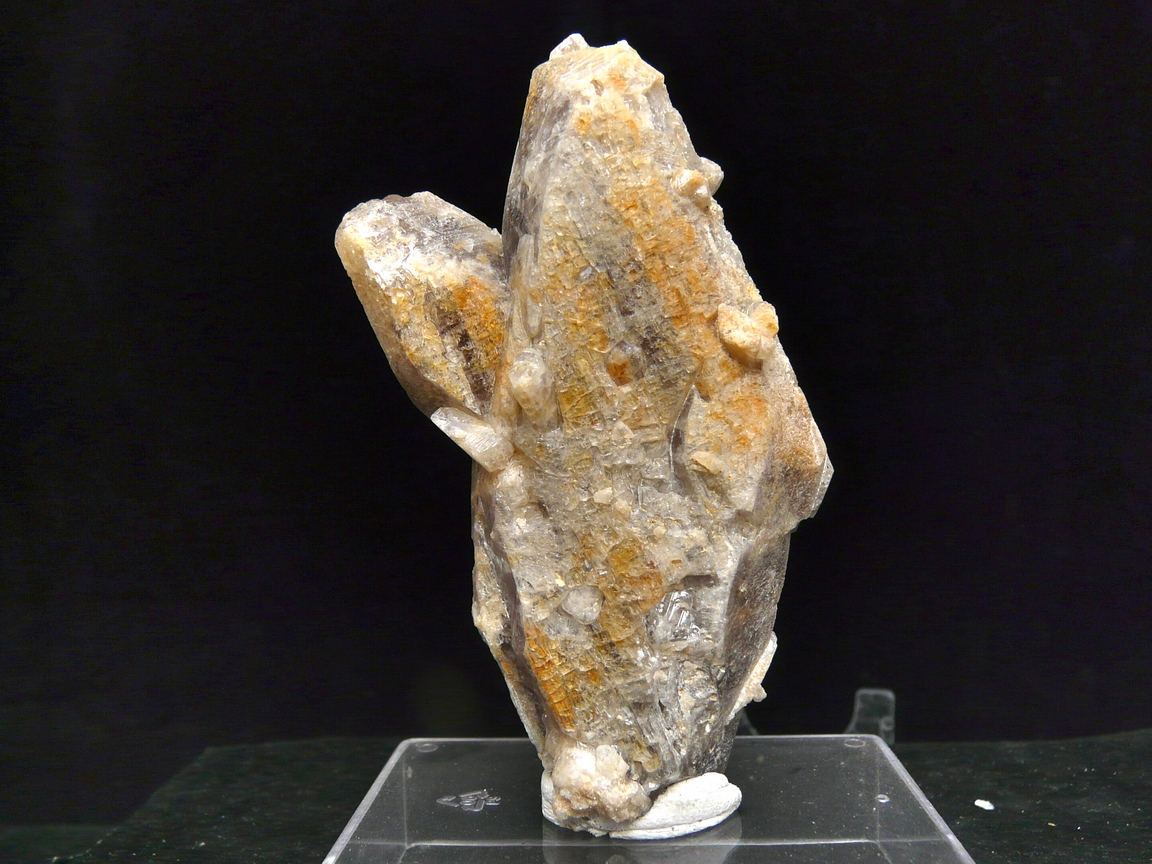
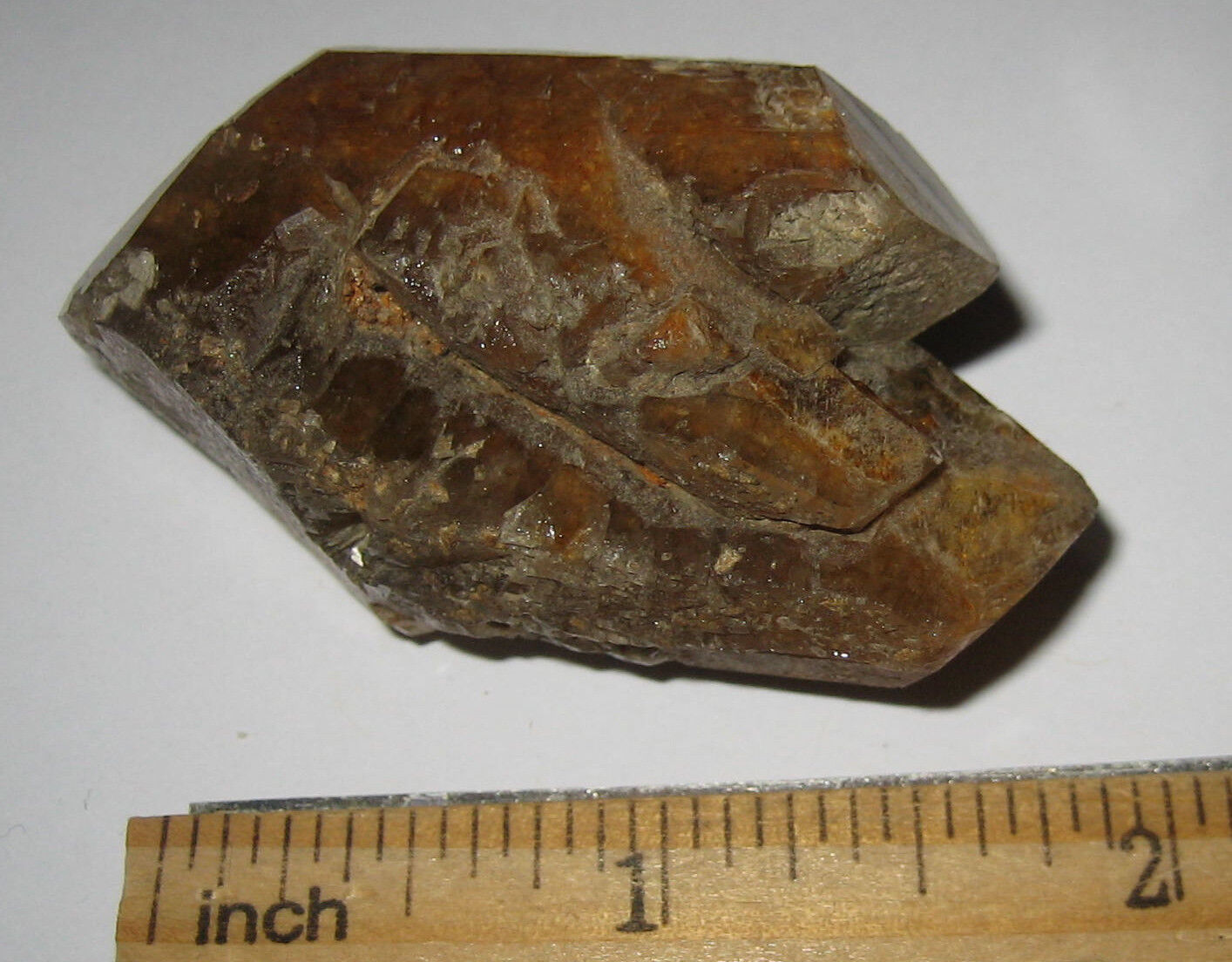
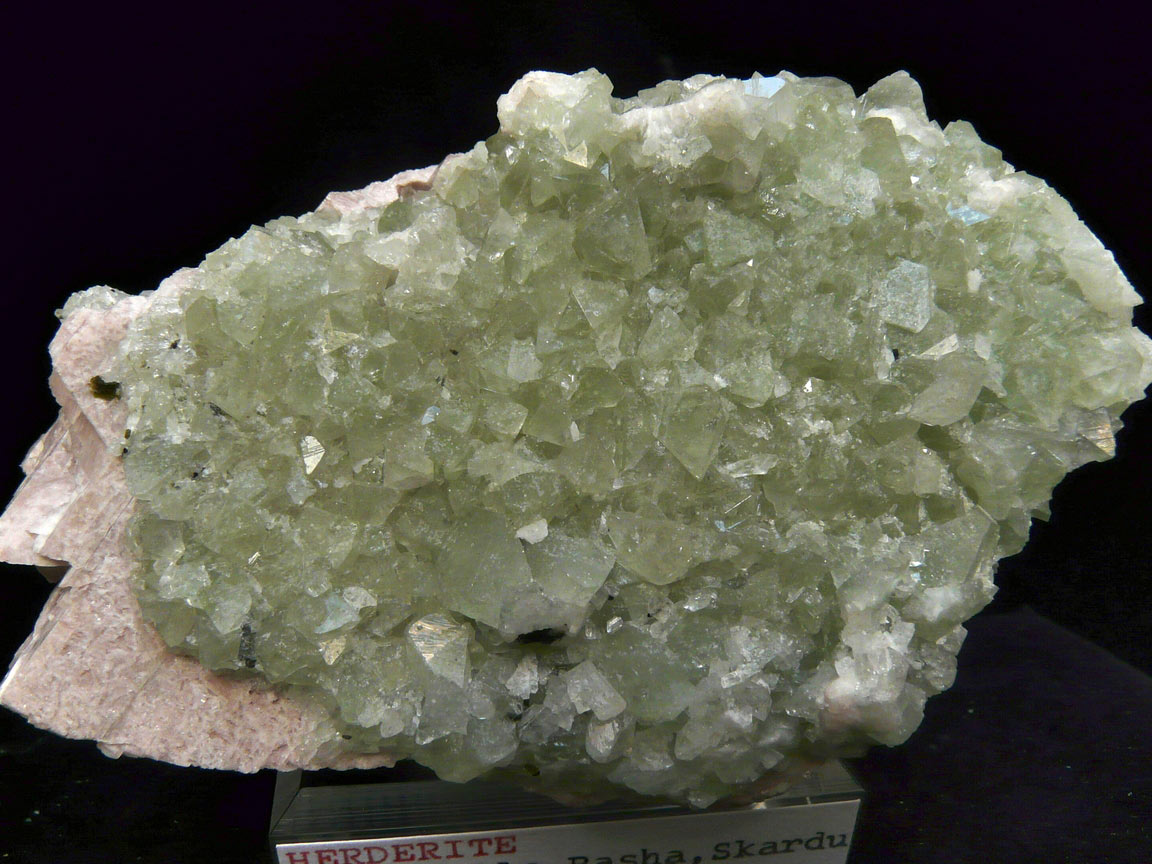
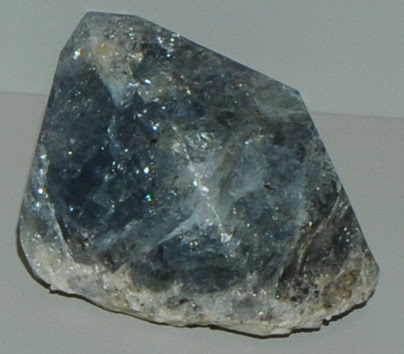
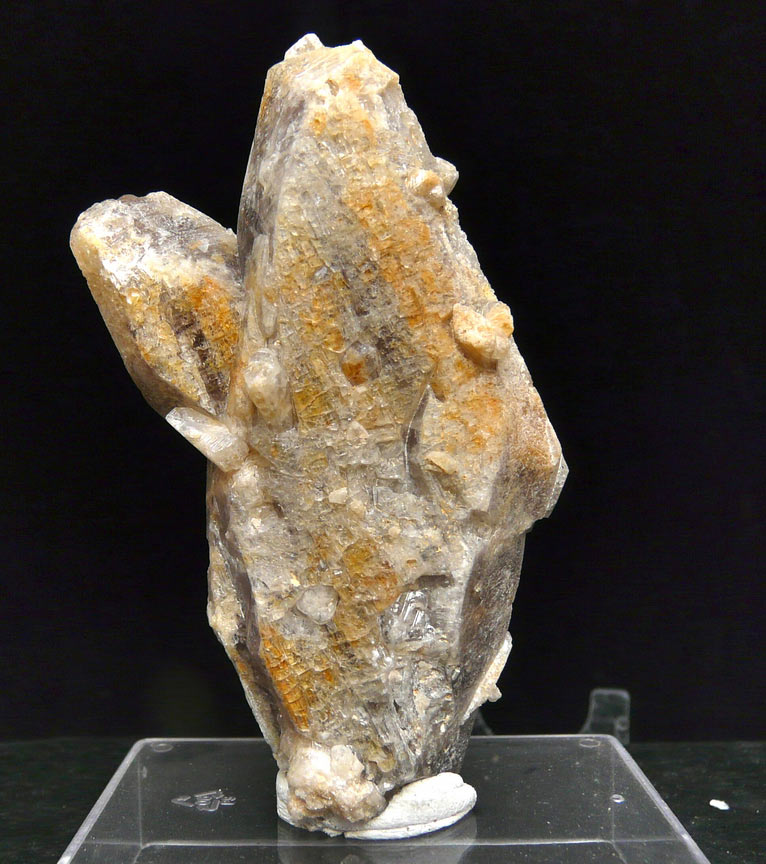
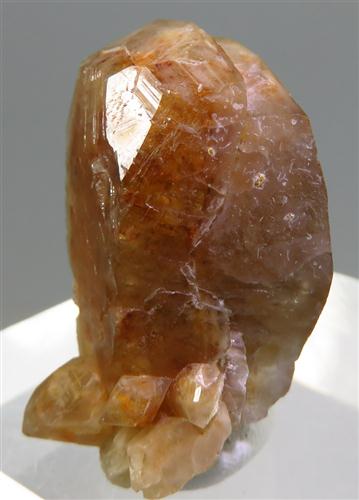
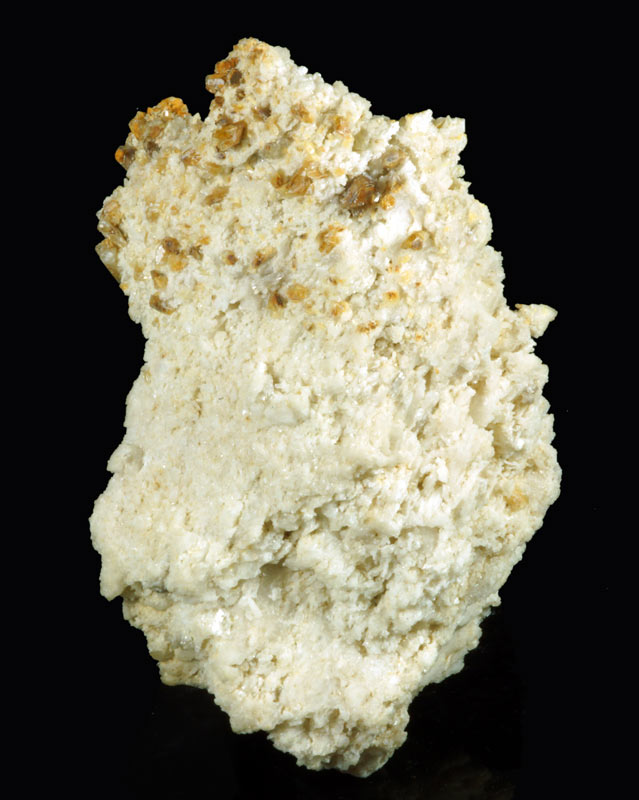
Herderite and hydroxylherderite are not two separate minerals but two ends of an unbroken chemical continuum. A single anion site in the lattice accepts any ratio of fluorine to hydroxyl — meaning a crystal can be 100% herderite, 100% hydroxylherderite, or anything in between. This F/OH substitution is one of the most common isomorphous series in mineralogy, but the herderite system is notable because the two end-members are formally classified as distinct species, making every intermediate specimen technically an unnamed mixture.
Beryllium is a light, hard element that overwhelmingly favours silicate minerals in nature — beryl, phenakite, chrysoberyl, and euclase are all silicates. Herderite and hydroxylherderite are among the very few minerals that combine beryllium with a phosphate group instead of silicate, placing them in a chemically exclusive niche. This unusual bonding environment — BeO₄ tetrahedra linked to PO₄ tetrahedra rather than SiO₄ — produces a dense, compact framework that contributes both to the mineral's moderate hardness and its distinctive physical properties.
"Ask about the immortal Atman within and not about the perishable body. All achievements, spiritual and temporal, belong to the realm of the ego."— Gnananda
Pick up a herderite and the first thing it does is climb. The energy gathers low, in the seat of will and personal fire where the body banks its strength, and from there — because there is real love in it — it spreads up into the chest, softening as it goes; but its true direction is upward, into the head. It fills the skull with a clear white light, and under that light the familiar sense of being a separate someone grows thin and begins to come apart. The purest, clearest crystals do this fastest and highest; the golden ones do it more warmly, and the green stones from the Pakistani mountains add a quiet thread of happiness to the unravelling.
What makes it formidable is not subtlety but persistence and sheer force. It does not work only at the most rarefied edge of things — it takes hold of an issue and presses, hard, and then it simply does not stop, through the day and through sleep, peeling one layer back after another until it reaches the structures everything else is built upon. Along the way it floods the system with fresh vitality, lifting the fog and the flat, drained heaviness that dulls ordinary life, and it pushes awareness outward until the mind feels suddenly roomier, its horizon further off. The brightness it leaves is not excitement but a plain, thoughtless clarity — the quiet that arrives the instant a knot lets go. Set on a bed of pale albite the whole effect deepens, as though the matrix were a hand cupped behind the light.
"To be relaxed and let go in the moment of recognizing — that is the most important thing."— Tulku Urgyen Rinpoche