

Na3AlF6
Radiant white light, and every edge dissolving
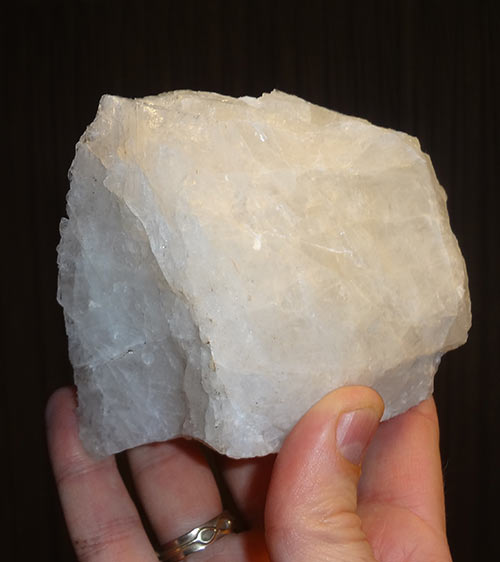
The name Cryolite comes from two ancient Greek words: κρύος (kryos), meaning frost or ice, and λίθος (lithos), meaning stone. Together they give us "ice-stone" — a name that could not be more apt. Large masses of natural Cryolite are almost perfectly transparent and have a refractive index so close to that of water (1.338 vs water's 1.333) that a Cryolite crystal placed in water becomes nearly invisible, dissolving into the liquid as if it were made of frozen light.
The German mineralogist and geologist Jens Esmark first described and named the mineral in 1799 following expeditions to the remote Ivittuut fjord of southern Greenland, where it occurred as a massive, waxy deposit unlike anything previously catalogued. Its ice-like lustre and translucent white body left early observers with the distinct impression they were handling solidified Arctic cold.
Cryolite belongs to the halide mineral class — specifically a fluoride — placing it in the same broad family as Fluorite and Villiaumite, but mineralogically distinct. Its structure is that of a distorted perovskite: aluminium sits at the centre of a regular octahedron of six fluorine atoms, and three sodium ions occupy the larger cavities between those octahedra. This arrangement is only slightly monoclinic (the beta angle deviates just fractionally from 90°), meaning Cryolite sits very close to cubic symmetry and frequently mimics pseudo-cubic habit in its crystals.
The mineral is soft (Mohs 2.5–3), heavy for its size (SG ~2.96), and notably fragile along its three cleavage directions. Its lustre ranges from vitreous to greasy, and its colour is typically snow-white to colourless, occasionally tinted pale yellow or reddish-brown by iron oxide inclusions. Its most celebrated optical property is its exceptionally low refractive index of approximately 1.338 — the lowest of any non-liquid mineral — which produces a barely-there, ghost-like transparency when the crystal is submerged in water.
The world's only significant natural deposit of Cryolite was located at Ivittuut (Ivigtut) on the Arsuk Fjord in southwestern Greenland. First formally described by Jens Esmark in 1799, the site revealed a remarkable geological anomaly: a single, lens-shaped body of nearly pure Cryolite embedded in granite, estimated to have weighed several million tonnes. For over 150 years this one deposit supplied virtually all of the world's Cryolite.
Commercial mining began around 1865 under Danish and later American control. The mineral became industrially critical during the 20th century as a flux in aluminium smelting — Cryolite dissolves aluminium oxide at temperatures that would otherwise be impractical, making the electrolytic production of aluminium economically viable. The Ivittuut deposit was so thoroughly mined that it was effectively exhausted by the 1980s. Today all industrial Cryolite is synthetic, making natural specimens from Greenland increasingly rare.
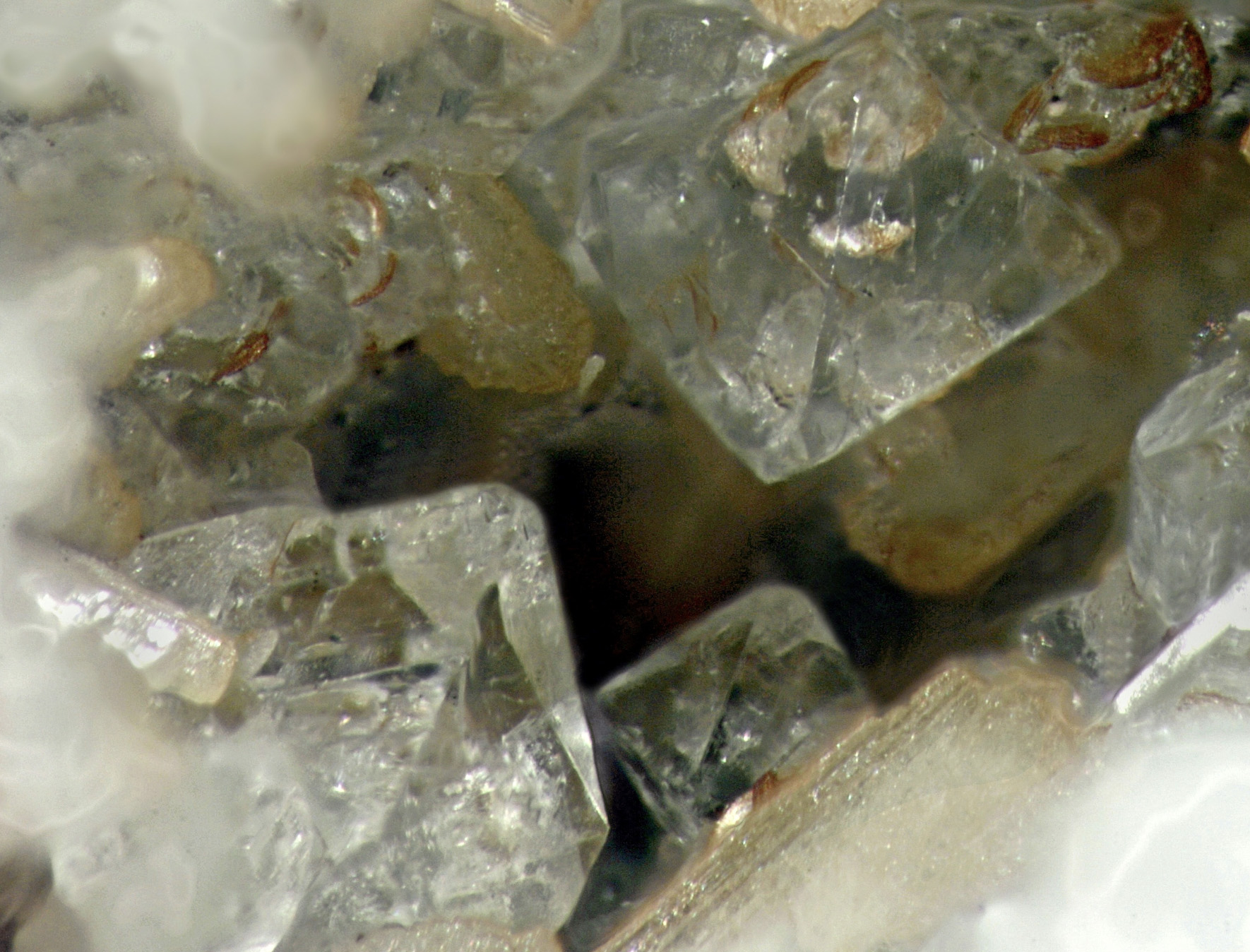
Secondary localities include the Miask area of the southern Urals (Russia), the Francon Quarry near Montreal (Quebec, Canada), the Almería region of Spain, and small occurrences in Namibia. Associated minerals at classic Greenland localities include Siderite (which forms characteristic golden-brown crystals alongside the white Cryolite masses), Columbite, Sphalerite, Galena, and Fluorite. Canadian material often shows beautiful stepped cubic-habit crystals with exceptional clarity.

Cryolite sits at the very ceiling of measurable vibrational bandwidth among all known crystals. Its energy is not hot or stimulating in the conventional sense; it is vast and still, like the Arctic sky at 3 a.m. Those who are sensitive report it as a sudden expansion of inner space, a widening of awareness that does not announce itself loudly but simply dissolves the felt sense of a boundary between self and field. It is a galactic stone in the truest sense: it seems to operate from beyond the personal.
Cryolite floods the physical and subtle bodies with a quality of white light that practitioners describe as simultaneously cleansing and filling. Cells seem to remember a more coherent template of themselves. Chronic energetic contractions — the residue of long-held emotion or trauma — loosen without requiring a dramatic release. The experience is less like a healing and more like a gentle, total reset: the body settling back into a frequency it had forgotten it was capable of holding. This makes Cryolite the most effective "non-believers' stone" — those who consider themselves insensitive to crystals often feel something unmistakable on first contact.
Mineralogically, Cryolite's defining characteristic is its near-perfect optical invisibility in water. This is not a metaphor but a measurable physical fact, and it mirrors the spiritual quality of the stone with unusual precision: Cryolite does not add anything to the field. It removes opacity. Where other high-frequency stones charge, amplify, or colour the energy body, Cryolite simply makes it more transparent — to itself and to what lies beyond. Its industrial legacy as the substance that dissolved barriers in aluminium smelting carries the same signature at the subtle level: it dissolves what resists transmission.
"This short human life is meant for the realization of the Self. Do not waste even a single moment, for time once gone can never be brought back, not even for all the wealth in the world."— Shukadeva
Cryolite is the stone that convinces the unconvinced. Hold a piece and a cool white light seems to pour in and keep pouring, until it is moving in every cell at once — a faint, bright humming that even people who have never felt a crystal in their lives tend to notice on the first try. It is among the strongest of all the stones, and one of the easiest to come by, and it does not need to announce any of that; the body simply registers it and goes quiet.
One of the first things to loosen under it is self-consciousness — the small constant bracing against being seen, the shyness and embarrassment that keep a person slightly hidden. As that contraction lets go, thinking clears too, the way fog lifts off water, and what is left is a plain, lit transparency: the inner light the old texts keep pointing at, no longer an idea but a felt fact.
The Cool White FloodIts cleansing is not a scrub or a slow soak but a flood of cold clear light that simply moves through, carrying off whatever does not belong the way a fast stream clears a channel. Nothing is forced out; in its presence the body remembers it never needed to hold those things in the first place, and they go. And the stone itself stays clear through all of it — it never clouds, never tires, never needs to be set down to recover.
"There is no me or I in the real world. There is only infinite consciousness."— Robert Adams
Held in stillness, it keeps opening outward. The light does not stop at the skin; it radiates past the edges of the body until the ordinary sense of being a small someone inside a large world grows thin and then quietly reverses. The gaps between thoughts widen on their own, the boundary between self and surrounding field stops being obvious, and what remains is simply vast — aware, unhurried, at ease with immensity, and as clear as the ice-stone has always been.
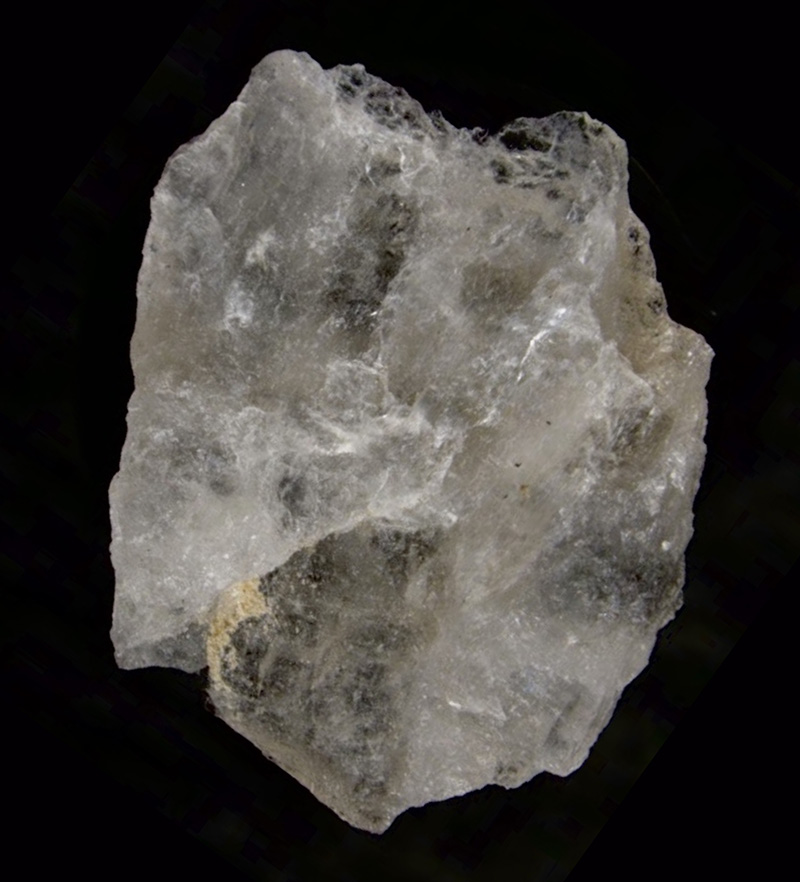
Simmonsite (Na2LiAlF6) is the extremely rare relative of Cryolite — a sodium–lithium–aluminium fluoride from the same halide family. It is known almost exclusively from the Zapot pegmatite in the Fitting District of Mineral County, Nevada, USA, where it grows alongside beautiful blue to blue-green Topaz and Amazonite crystals. It is most reliably identified by its distinctive orange fluorescence under short-wave ultraviolet light.
Energetically it is Cryolite's near-twin, but pitched higher and colder. Where Cryolite's white light is forgiving and almost maternal, Simmonsite's is finer, sharper and more austere — a clear light with no warmth in it, reaching past the body's surface layers into far older and more deeply set material. It does not soften what it finds the way Cryolite does; it simply shows it, plainly, in a cold clear light, and asks you to meet it as it is. For that reason it is a stone for the seasoned rather than the beginner — less a gentle reset than an unflinching one.