
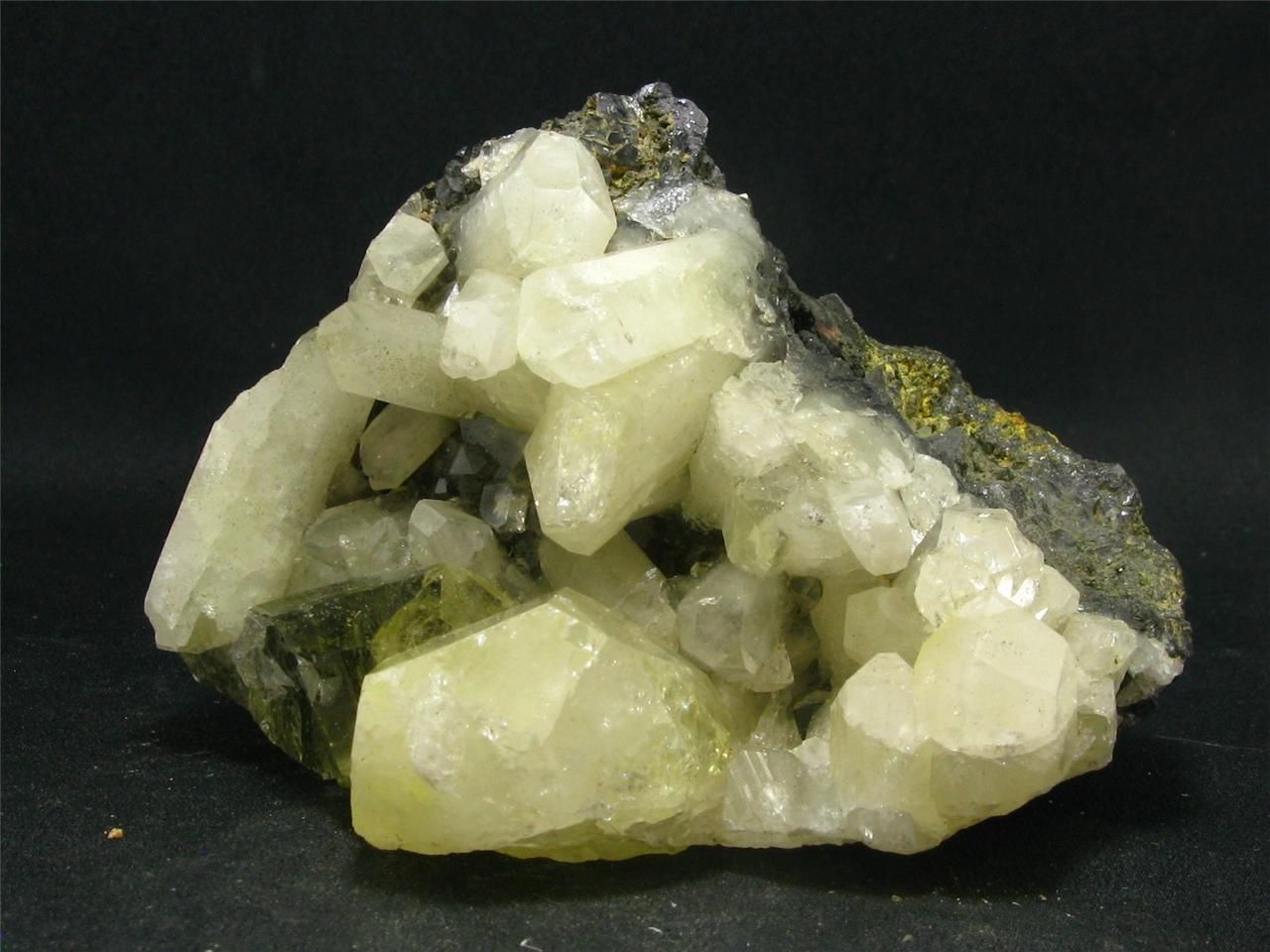
PbSO4
Steady courage to face what is true
Anglesite is named for the island of Anglesey (Welsh Ynys Môn) in Wales, where the mineral was first recognised at the Parys Mountain copper mine. It was described and named in 1832 by the French mineralogist François Sulpice Beudant, after whom beudantite is in turn named.
The place-name fixes anglesite firmly in the history of British mining: Parys Mountain was one of the great copper workings of the eighteenth century, and anglesite was found among the weathered lead minerals of the orefield.
Anglesite is lead sulfate, PbSO4, crystallising in the orthorhombic system as a member of the barite group, isostructural with barite (barium sulfate) and celestine (strontium sulfate). Heavy lead ions sit among isolated sulfate tetrahedra, giving the mineral a notably high density and a brilliant adamantine-to-resinous lustre and high refractive index. It is soft (Mohs 2.5–3) and ranges from colourless and white through grey, yellow and pale green.
It is a secondary mineral, forming in the oxidised zone of lead deposits where galena (lead sulfide) weathers; anglesite frequently grows as a crust directly around a galena core, the sulfide quietly transforming into sulfate from the outside in. As a lead mineral it should be handled cleanly, not ingested, and hands washed after handling.
First found at Parys Mountain on Anglesey and named in 1832, anglesite has since been recognised as a common and widespread oxidation product wherever lead ores weather near the surface.
Outstanding crystallised specimens come from Touissit in Morocco, Tsumeb in Namibia, Monteponi in Sardinia, the lead districts of the United States, and many other localities. The Moroccan and Namibian crystals in particular — large, lustrous and gemmy — are prized by collectors, and rare transparent material is occasionally faceted as a heavy, brilliant collector gemstone despite its softness.
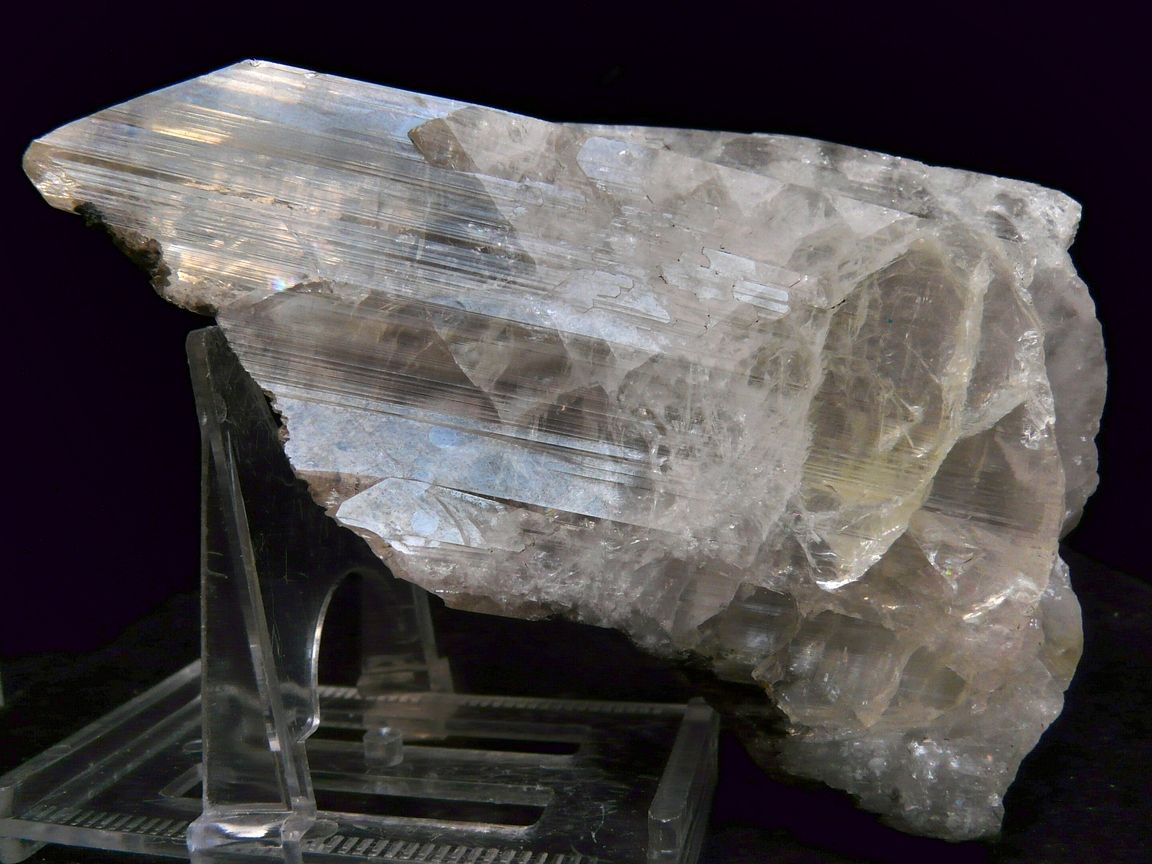
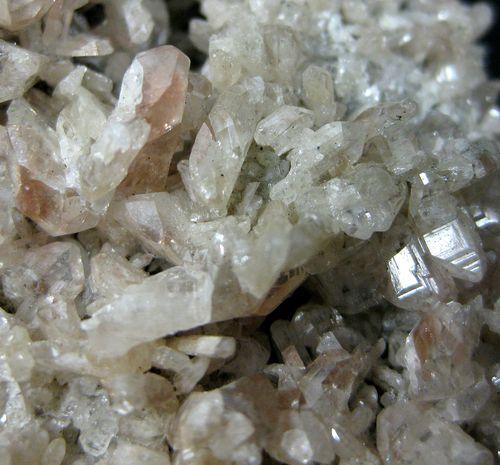

Lead gives anglesite a remarkable density and a high refractive index, so even colourless crystals flash with a bright, almost diamond-like lustre — a heavy stone that carries light with surprising fire.
Anglesite shares its structure with barite and celestine, the lead-bearing member of a tidy mineral trio. The same sulfate framework holds barium, strontium or lead, giving three related but distinct species.
Anglesite forms where lead sulfide weathers, often as a bright rind around a galena core — a visible record of one mineral quietly transforming into another in the oxidised zone of the orefield.
"Do not follow after the past, do not invite the future, and do not alter the present. Simply rest in the natural state of luminous clarity, exactly as it is."— Khenchen Tsewang Rigdzin
Anglesite is a stone of stabilisation and courage. Heavy with lead, it carries that density into its energetic work: it grounds. Its frequency sits at the solar plexus — the fire-centre of will, agency and personal power, where the body stores its energy like a battery — and anglesite steadies that centre, giving a person the firm base from which courage can actually be found. Courage is not the absence of difficulty but the strength to stand in it, and that is what this stone supplies.
Its named purpose is to help one face the truth and accept difficult circumstances with peace. It does this as an Expanding stone: the energy radiates outward from the solar plexus, making a person feel bigger, stronger and more at one with their surroundings, so that hard reality no longer overwhelms but is met from a place of breadth. As a Life stone it feeds that centre with vitality, lifting the drained, foggy heaviness that fear leaves behind, and with a Duration of seven it stays a long companion through whatever must be faced.
And Joy waits underneath the courage — the quiet gladness that comes when a person stops fighting what is and simply rests in the clarity of what is true.
"Bhiu nakos, mee tuzhya paathishi aahe. — Do not fear, I am always right behind you."— Swami Samarth
Among anglesite's closest kin is Phosgenite, a lead carbonate-chloride — Pb2(CO3)Cl2 — that forms in the very same place: the oxidised zone of weathering lead deposits, in cavities within altered galena, side by side with cerussite and anglesite. Like them it is soft (Mohs 2–3), heavy with lead, and brilliantly adamantine, its tabular crystals ranging from colourless through honey-yellow to smoky brown.
Its curious name was given by August Breithaupt in 1820 after phosgene (carbon oxychloride) — not because the mineral is in any way that poisonous gas, but simply because it is built from the same three elements: carbon, oxygen and chlorine. It was first found at Cromford near Matlock in Derbyshire, England (and was long called cromfordite), with the most celebrated crystals coming from Monteponi in Sardinia. It is sectile enough to be cut with a knife and often glows under ultraviolet light. As a lead mineral, it should be handled cleanly and never ingested.
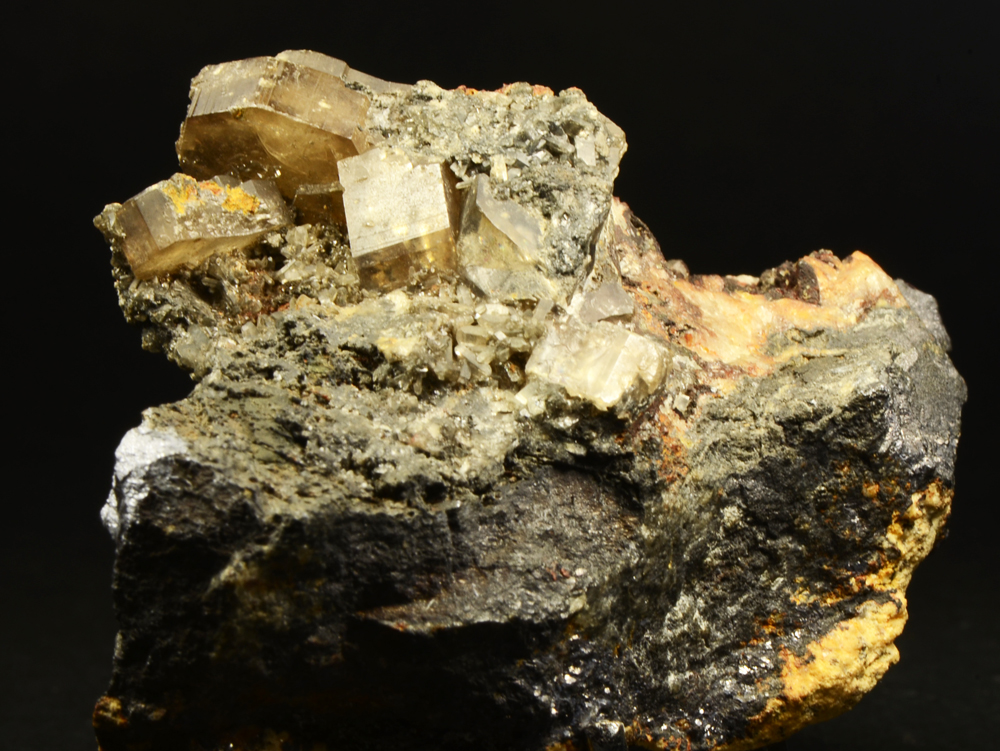
Energetically, phosgenite belongs to the same family as anglesite and cerussite — the sober, steadying lead minerals that help a person stabilise, find courage, and face what is true without flinching.
What sets it apart is that it is more grounding. Where anglesite steadies the will at the solar plexus and cerussite calms and settles, phosgenite takes that same calm, truthful energy and pulls it further down — toward the root and the earth, anchoring the whole system. It is the most earthed of the three: the stone for when you need not only to face reality, but to stand on solid ground while you do it.